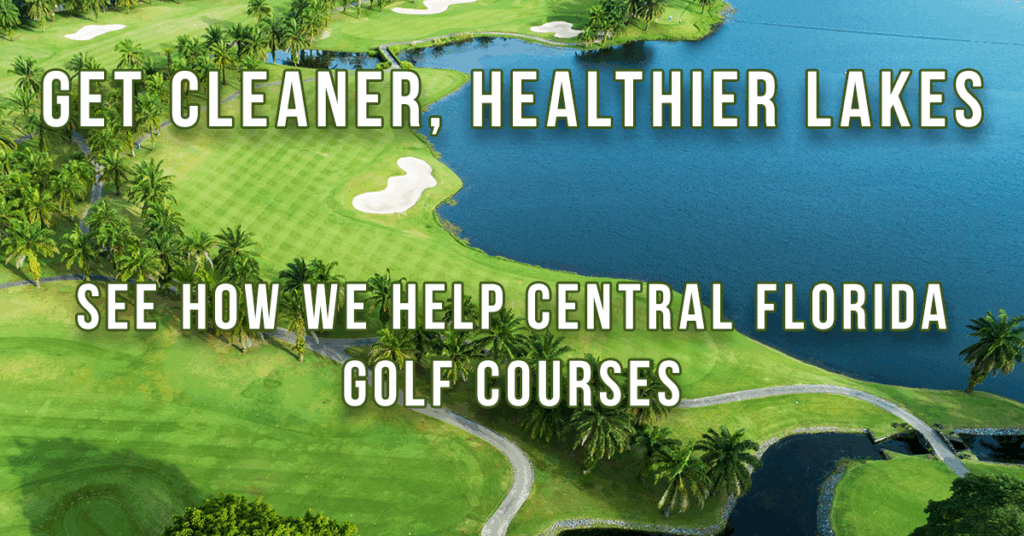
Golf course lake maintenance in Florida is about more than just visual appeal—it’s vital for turf health, property value, and environmental compliance. In Central Florida, where water features are both aesthetic and functional elements of many courses, consistent lake care is a strategic necessity, and in some cases, part of staying compliant with Florida DEP stormwater management best practices. According to the DEP-endorsed Best Management Practices for Florida Golf Courses, consistent nutrient management and water quality monitoring are key to maintaining healthy water features and complying with regulatory standardsThis guide explains why lake maintenance matters for golf courses and other upscale recreational properties.
Unlike natural lakes or stormwater ponds, golf course lakes must serve multiple roles: they support irrigation systems, provide visual harmony to the landscape, and affect the playability of the course. This combination of utility and beauty means they are prone to specific issues like:
Algae blooms triggered by fertilizer runoff
Clogged irrigation intake lines from invasive vegetation
Erosion of lake banks due to fluctuating water levels
Foul odors or stagnant water that affect the guest experience
A regular lake maintenance program helps address these problems before they disrupt course operations or aesthetics.
Golf course turf relies on healthy, oxygenated water, especially for courses using lake-fed irrigation systems. If lakes are filled with sediment or experiencing oxygen depletion from organic buildup, water quality suffers, and so does turf performance. Consequences include:
Patchy or burned grass due to chemical imbalances
Increased turf disease from low water quality
Expensive damage to irrigation pumps and filters
Regular aquatic care helps maintain optimal water quality and protects turf investments.
Florida’s year-round growing season and heavy rains create conditions where aquatic weeds, algae, and shoreline erosion thrive. Golf course lake maintenance in Florida should be tailored to each season:
Spring: Vegetation control before warm weather spikes growth
Summer: Algae management, oxygenation, and bank stabilization
Fall: Inspection of stormwater function and sediment control
Winter: Debris removal and planning for new treatments
A proactive, year-round approach prevents emergencies and keeps operations consistent.
While this article focuses on golf courses, similar maintenance benefits apply to:
Resort and spa properties with guest-facing water features
Equestrian estates where lake-fed irrigation supports paddocks
Retirement communities with water-centric landscaping
Private schools and universities with campus lakes
Each of these properties has high standards for appearance, safety, and environmental stewardship, making professional lake care a smart investment.
Project 7 Services specializes in environmentally responsible lake cleaning and aquatic management across Central Florida. We understand the unique needs of golf courses and high-end properties, offering:
Licensed herbicide application
Mechanical weed removal
Aeration systems and fountain maintenance
Shoreline erosion repair
Our team provides free, no-obligation quotes and long-term solutions customized to each course’s needs.
Is your golf course or recreational property struggling with water quality issues? Request a free quote today and discover how Project 7 Services can elevate your lake care plan.
Q: How often should golf course lakes be treated in Florida?
A: Treatment schedules vary by season, but monthly maintenance is typical to prevent algae and manage vegetation.
Q: Do you service private golf clubs or only public courses?
A: We serve all types of golf facilities, including private clubs, municipal courses, and resort properties.
Q: Can you help with irrigation problems related to lake water quality?
A: Yes. We diagnose and treat issues that impact water clarity and pump system performance.
Q: Is the treatment safe for wildlife and pets?
A: Absolutely. We use only approved methods and treatments that are safe for aquatic ecosystems and animals.