Aquatic weed control techniques are essential for maintaining a clear, healthy lake. Aquatic weeds can transform inviting waters into tangled messes that block sunlight, hinder boating and swimming, and harm fish habitats. When left unchecked, decaying vegetation adds organic muck to the lake bottom and fuels algae blooms that further reduce clarity and oxygen levels. Choosing the right combination of removal methods depends on factors such as the dominant weed species, lake depth, intended water uses, and local regulations. Below we explore five proven techniques for aquatic weed control—mechanical raking, herbicide treatment, grass carp stocking, bottom barriers, and ultrasonic systems—along with their advantages, limitations, and best-use scenarios. By understanding these options, lake managers and property owners can develop a tailored plan that keeps the water crystal clear throughout the year.
1. Mechanical Raking and Harvesting
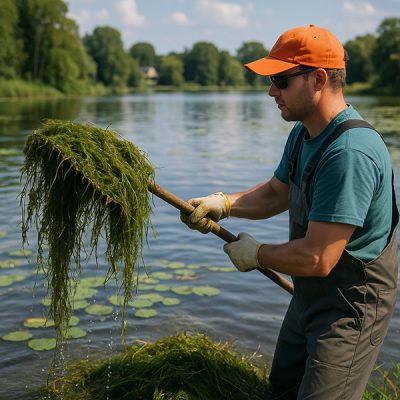
Mechanical raking relies on specialized equipment—often mounted on barges or skiffs—to cut plant stems just below the water surface and collect the clippings for removal. Harvesters work much like lawn mowers, but instead of grass, they sever hydrilla, Eurasian watermilfoil, and other submerged weeds. The machine’s conveyor lifts the biomass onto a holding area where it can be offloaded and hauled away. This approach delivers immediate results over large areas and helps prevent decomposed material from settling on the lake bottom. It also avoids introducing chemicals into the water. Costs vary based on the size of the infestation and equipment rental or contractor fees, but repeat visits during the growing season can keep regrowth in check without long-term environmental impacts.
2. Targeted Herbicide Treatment
Chemical control of aquatic weeds uses approved herbicides applied either by foliar spray in shallow zones or by direct injection in deeper areas. Common active agents, such as 2,4-D and triclopyr, disrupt plant growth without harming most fish and non-target vegetation when applied according to label instructions. Herbicide treatments can cover broad swaths of shoreline and provide lasting suppression, especially when timed to target weeds at their most vulnerable growth stage. Applications often require permits and post-treatment water-use restrictions, so planning and compliance with environmental guidelines are essential. Integrating herbicide treatment with mechanical harvesting or biological control can extend the effectiveness of each method while minimizing chemical usage.
3. Biological Control with Grass Carp
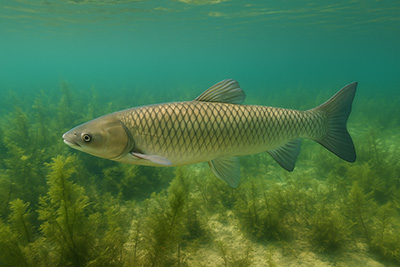
Triploid grass carp—sterile fish incapable of reproduction—offer a natural way to reduce weed biomass over time. Each adult grass carp can consume up to its body weight in vegetation each day, grazing on submersed and emergent species. Managers calculate stocking rates based on lake area and target weed density to achieve the desired level of control in one to two growing seasons. Because the fish reproduce no further, they provide a self-regulating system once established. Monitoring is critical, however, to avoid overgrazing and ensure that desirable native plants are not eliminated. Grass carp work best in lakes where weeds are scattered rather than concentrated in a few dense beds.
4. Bottom Barriers
Also known as benthic mats or lake-bottom blankets, bottom barriers are sheets of robust fabric laid directly over the lake bed to block sunlight and prevent plant growth. Mats come in permeable and impermeable varieties, and they are secured in place with anchors or weighted edges. This method is highly effective for localized problem areas such as swim zones, boat ramps, or around docks where a chemical or mechanical approach may be impractical. Installation is straightforward, but materials and labor costs make bottom barriers most suitable for small to moderate patches rather than entire shorelines. Periodic inspection ensures that mats remain in position and continue to suppress weeds.
5. Ultrasonic Treatment
Ultrasonic devices generate sound waves at specific frequencies that disrupt cell structures of algae and certain aquatic plants, causing them to sink and decompose on the bottom. These systems operate continuously, often drawing power from the shore or solar panels, and require minimal hands-on maintenance once installed. Although most effective against free-floating algae, ultrasonic treatment can also inhibit some submerged weeds by creating an unfavorable acoustic environment. Initial costs depend on lake size and depth, but running expenses are typically low. Ultrasonic control works best as a supplemental measure alongside physical removal or herbicide treatment, providing ongoing suppression without added chemicals.
Conclusion
No single technique will solve every lake-clearing challenge. Mechanical harvesting can rapidly reduce biomass, after which herbicide treatments or grass carp can limit regrowth. Bottom barriers protect high-value zones, while ultrasonic systems offer continuous algae control. A strategic combination of these methods—chosen based on lake characteristics, regulatory requirements, and budget—yields the best long-term results. By assessing site-specific conditions and integrating complementary approaches, lake managers and waterfront property owners can restore and maintain crystal-clear water that supports recreation, wildlife, and ecosystem health.
Grass Carp for Pond Weed Management (Oklahoma State University Extension)
https://extension.okstate.edu/fact-sheets/grass-carp-for-pond-weed-management.html